Introduction

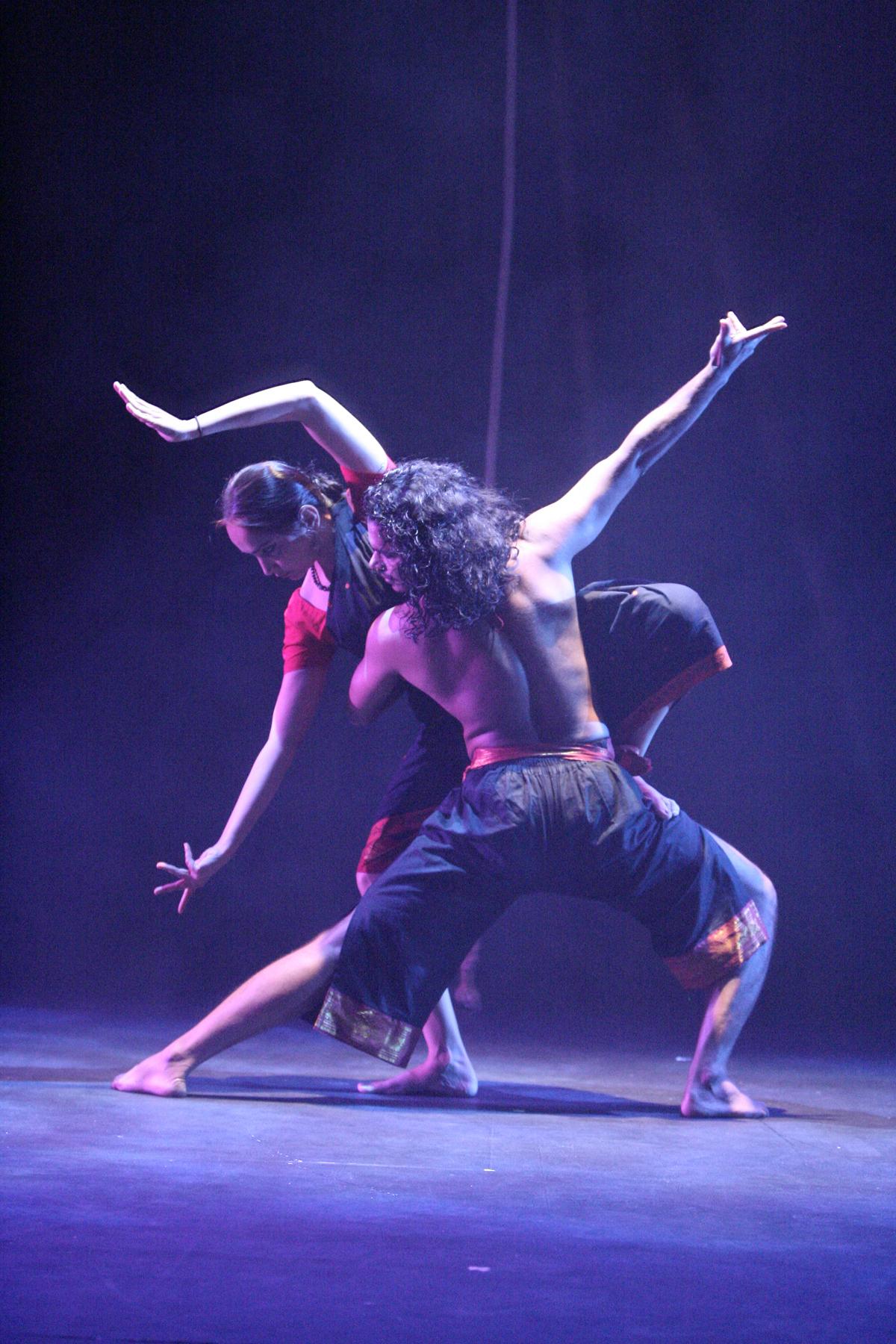
Aparna Sindhoor has lived in two very different worlds. She grew up in the city of Mysore in southern India, but in 1996 she moved to the U.S. and is now based in Somerville, Massachusetts. There she runs the Aparna Sindhoor Dance Theater. Her company is gaining recognition and even performed at Lincoln Center in New York City this spring. Both a dancer and a choreographer, Aparna has performed on stages around the world. Her dances often focus on women, blending classical and contemporary stories, music, and movement from India, Europe, and America. Aparna talked with Teen Voices about her love of performing, her childhood, and why she thinks it's harder for women of color to establish their own businesses in the U.S.
When did Aparna start to dance?
Teen Voices: When did you start to dance?
Aparna Sindhoor: My mother is a dancer, and I've danced since I was five years old. My mother trained me a little bit, but when I was eight, she sent me to a teacher.
Training in India
Teen Voices: Where did you train?
Aparna Sindhoor: Mainly in India, in Mysore, where I grew up. I was trained in a classical dance form called Bharatanatyam. The training is similar to ballet; it's very rigid.
Inspiration behind becoming a dancer
Teen Voices: What inspired you to become a dancer?
Aparna Sindhoor: I don't remember a particular moment or anything. I've always wanted to be a dancer because my mother was a dancer. There was always dance and music in the house; my father was a singer. I always remember dancing. I was born with it.
Admiration for dancers
Teen Voices: Which dancers do you admire?
Aparna Sindhoor: I have many dancers I admire, in addition to my mother. The first is my teacher in England who passed away in 2002 when she was 96 years old. When I went to her she was already very old. I've never seen her do a full standing performance, but she has inspired me all my life. I also love Alvin Ailey. When I first came to the U.S., I was a student so I was able to get cheap tickets and I watched all the big dancers—Ailey, Mark Morris. And I worked with a New York-based, predominantly African-American company. It was a good experience for me to see forms of dance from Africa, rather than just mainstream, white, American ballet, which is most of what you see on TV and outside the U.S.
The joy of performing
Teen Voices: How do you feel when you perform and see a large crowd?
Aparna Sindhoor: Happy. I'm an introverted artist, meaning when I perform, I don't pay attention to the audience. I actually forget who I'm performing for. But after the show, when they clap and when I see people at the gates, the audience becomes very important to me.
Challenges faced by women of color in the U.S.
Teen Voices: Has it been difficult to reach your goals in America? Why or why not?
Aparna Sindhoor: It's an ongoing journey, I'd say. First of all, goals keep shifting, right? But I feel there are a lot more hurdles that we encounter as women of color. It's very hard in terms of getting funding. Also, a lot of the time people exoticize* a person from another country and another culture. I'm not saying there shouldn't be curiosity, though—I'm curious about other cultures myself.
Unique aspects of Aparna's dancing
Teen Voices: What do you think makes your dancing different from other types of dance?
Aparna Sindhoor: When I create my work I don't think, "Okay, now I'm going to make a new kind of dance." It's more like, what do I want to do? My new work is called "A Story and A Song." It's based on traditional and contemporary folktales, told by women. I'm always fascinated by women's tales. When I was little, there was this old lady in my house. I used to love that old lady. All the kids would always gather around her because she was a storyteller. She told stories from mythology and fairy tales, and also made up her own stories. I never understood her talent when I was little but I was always going to her. So she is always in my mind, even though she is now long gone.
Tips for aspiring dancers and choreographers
Teen Voices: What do you think a young student of dance needs to be successful?
Aparna Sindhoor: Dedication, and also I feel there has to be love of the art, whether it's dance or music or whatever. I always say to my students that it's not like every morning I get up and go, "Oh, let me do my warm-ups now! I love dance, I'm a dancer and I love warm-ups!" I don't do it like that; I'm honest with them. Some mornings I'm like "God, I have to get up now." I feel the same way you do, like, "Oh, I have to go to school." I have the same problems. It's not like every day is a love fest with dance, and that's true for everybody. Young dancers shouldn't give up hope.
A message for teen girls who aspire to be dancers
Teen Voices: What advice do you have for teen girls who want to be choreographers or dancers?
Aparna Sindhoor: For choreographers: I would just say "play"—you know, just do it. Meaning: play any music, dance, go for it, and don't hold back. There is nothing called perfection. Only when we experiment do we find new things. For dancers, I think it's similar in terms of being free with your body. Many of my students come to me saying, "Oh, I really need to lose weight." I always say, "You don't need to lose weight, you have to become fit." It's not about having the weight of a dancer—it's about, does your abdomen have strength?
The impact of Aparna's performances
Teen Voices: What do you hope American audiences will learn from your performances?
Aparna Sindhoor: I don't know. I just feel that if there is more acceptance, more goodness, I learn from the audience and the audience learns from the performance. Not anything specific; there's no moral or anything. It's more like an open dialogue between the artist and the audience. I am very lucky to have that in general with my audience.
In conclusion, Aparna Sindhoor's journey from India to America has shaped her identity as a dancer and choreographer. Through her unique blend of classical and contemporary stories, music, and movement, she has established herself as a prominent figure in the dance world. Despite facing challenges as a woman of color in the U.S., Aparna remains dedicated to her art, constantly striving to break stereotypes and inspire others. Her performances serve as a platform for dialogue and understanding, fostering acceptance and goodness within her audiences.
-
Cancun
- Grand Palladium Costa Mujeres
- Breathless Soul Cancun
- Iberostar Selection Cancun
- Cancun Hotels With Beach